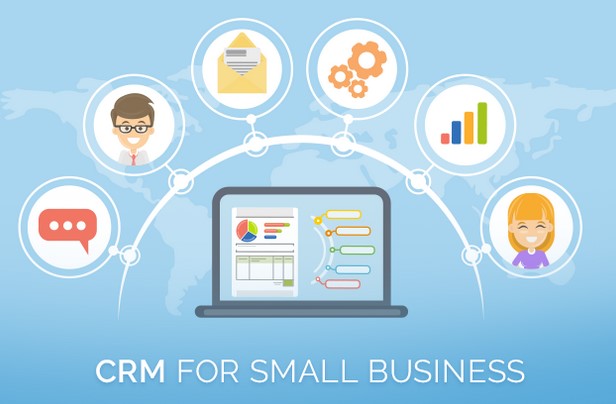
For small businesses striving to grow without overextending their budgets, managing customer relationships efficiently is a constant challenge. Affordable CRM options have become essential tools for organizing contacts, tracking sales, and improving customer engagement without the high costs traditionally associated with enterprise software. This article introduces a new way of evaluating CRM solutions—not just by price, but by how well they support sustainable growth, operational clarity, and long-term value for small businesses.
Why Small Businesses Need CRM Systems Early
Many small businesses delay adopting a CRM system, assuming it is only necessary once operations become complex. In reality, implementing a CRM early can prevent inefficiencies and missed opportunities that are difficult to correct later. Even with a small customer base, information quickly becomes fragmented across emails, spreadsheets, and messaging apps.
A CRM centralizes customer data, providing a single source of truth for interactions, preferences, and history. This visibility allows small teams to respond faster, personalize communication, and maintain consistency as the business grows. It also reduces dependency on individual employees’ memory or personal systems, which can be risky as teams expand or roles change.
Another key benefit is process discipline. CRMs encourage structured sales and customer service workflows, helping small businesses build repeatable processes from the start. This structure supports better forecasting, clearer accountability, and more informed decision-making—all of which are critical for growth.
Importantly, CRM systems are no longer limited to sales tracking. Many affordable solutions now include features for marketing automation, customer support, and reporting, making them versatile platforms rather than single-purpose tools.
Rethinking “Affordable” Beyond the Price Tag
Affordability should not be defined solely by subscription cost. A CRM that is inexpensive but difficult to use or poorly aligned with business needs can become costly in terms of wasted time and missed opportunities. A more effective way to assess affordability is to consider total value.
Ease of use is a major factor. Small businesses often lack dedicated IT staff, so a CRM must be intuitive and quick to adopt. Systems that require extensive customization or technical expertise may slow down teams and reduce adoption rates, negating their initial cost advantage.
Scalability is another important consideration. A CRM should grow with the business, allowing users to add features, contacts, or integrations as needed. Choosing a solution that fits current needs but cannot scale may lead to costly migrations later.
Support and community resources also contribute to affordability. Access to tutorials, documentation, and responsive customer support reduces downtime and training costs. Some CRM providers offer strong user communities where small businesses can learn best practices and troubleshoot issues collaboratively.
Prioritizing Features That Deliver Immediate Impact
Small businesses do not need every feature offered by large enterprise CRMs. Instead, they should focus on core capabilities that deliver immediate operational benefits. Contact management, deal tracking, task reminders, and basic reporting are often sufficient at early stages.
Automation features, even simple ones, can significantly improve efficiency. Automated follow-ups, lead assignment, and activity logging reduce manual work and help small teams stay organized. These efficiencies translate directly into time savings, which is often more valuable than cost savings.
Integration capabilities should also be considered. A CRM that connects easily with email, accounting software, or e-commerce platforms creates a more seamless workflow. This reduces data duplication and ensures that customer information remains accurate and up to date across systems.
Customization should be balanced with simplicity. While some flexibility is useful, overly complex customization can overwhelm users. The most affordable CRM solutions are those that offer just enough configurability to match business processes without introducing unnecessary complexity.
Building a CRM Strategy for Long-Term Value
Selecting a CRM is not just a software decision; it is a strategic one. To maximize value, small businesses should define clear objectives before implementation. Whether the goal is improving lead conversion, enhancing customer retention, or gaining better visibility into sales performance, clarity of purpose guides better system configuration and usage.
Employee adoption is critical to success. Even the most affordable and feature-rich CRM fails if it is not used consistently. Involving team members in the selection process, providing basic training, and setting clear expectations for usage can significantly improve adoption rates.
Data quality should also be prioritized from the beginning. Establishing simple rules for data entry and maintenance ensures that reports and insights remain reliable. Clean data allows small businesses to make confident decisions and identify trends that support growth.
Regular review is another new idea often overlooked by small businesses. As operations evolve, CRM usage should be reassessed to ensure it still aligns with business needs. Periodic reviews help identify unused features, process gaps, or opportunities to automate additional tasks.
In conclusion, CRM systems are no longer a luxury reserved for large organizations. With careful evaluation and strategic use, small businesses can gain substantial benefits without excessive cost. By focusing on usability, scalability, and immediate impact, Affordable CRM options can empower small businesses to build stronger customer relationships, improve efficiency, and support long-term, sustainable growth.